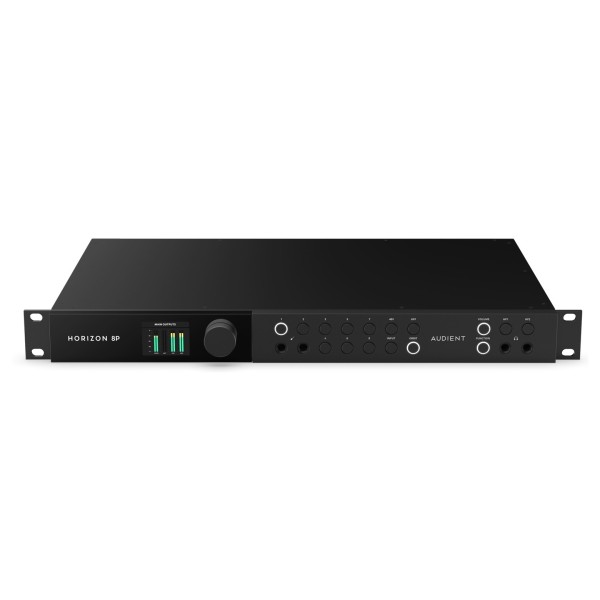
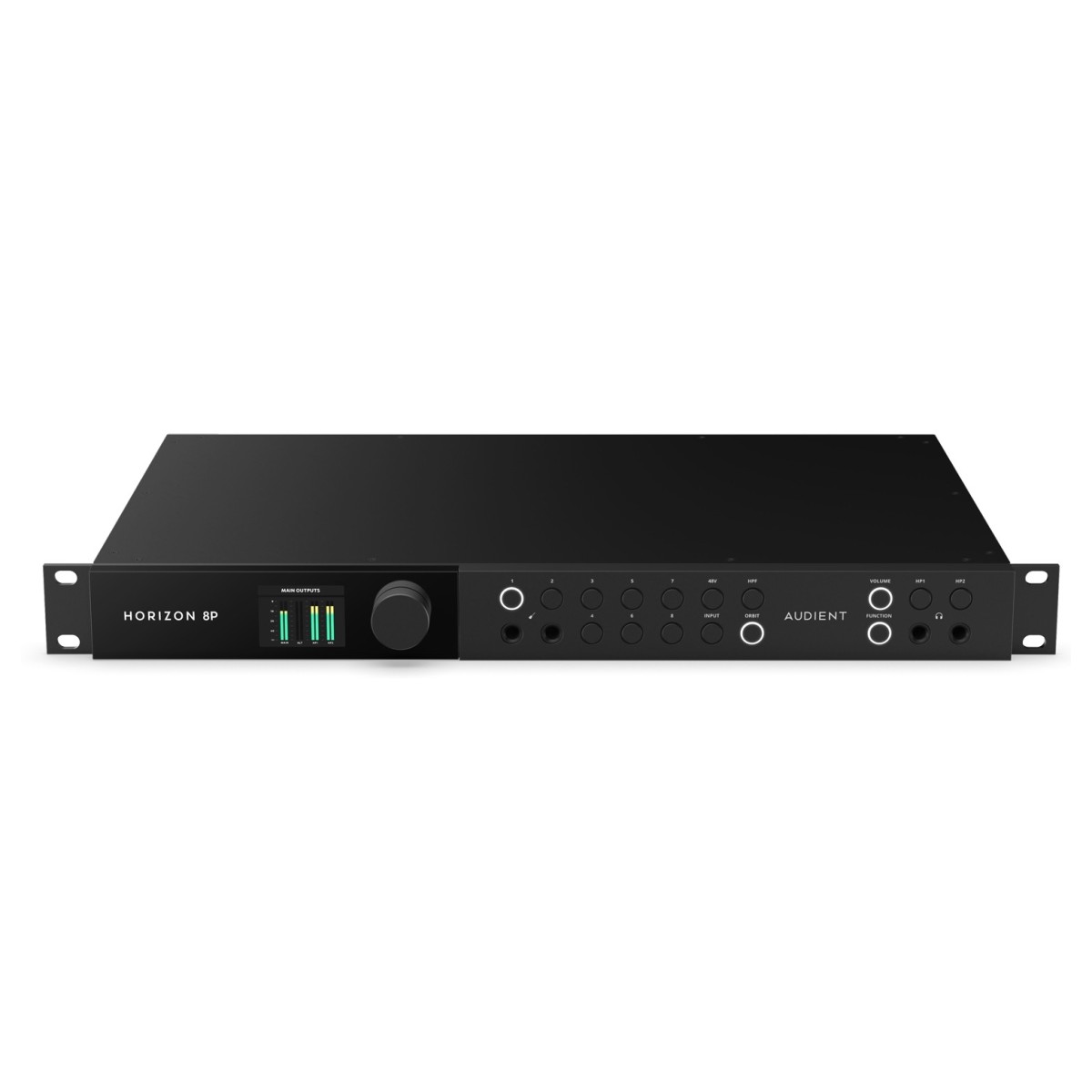
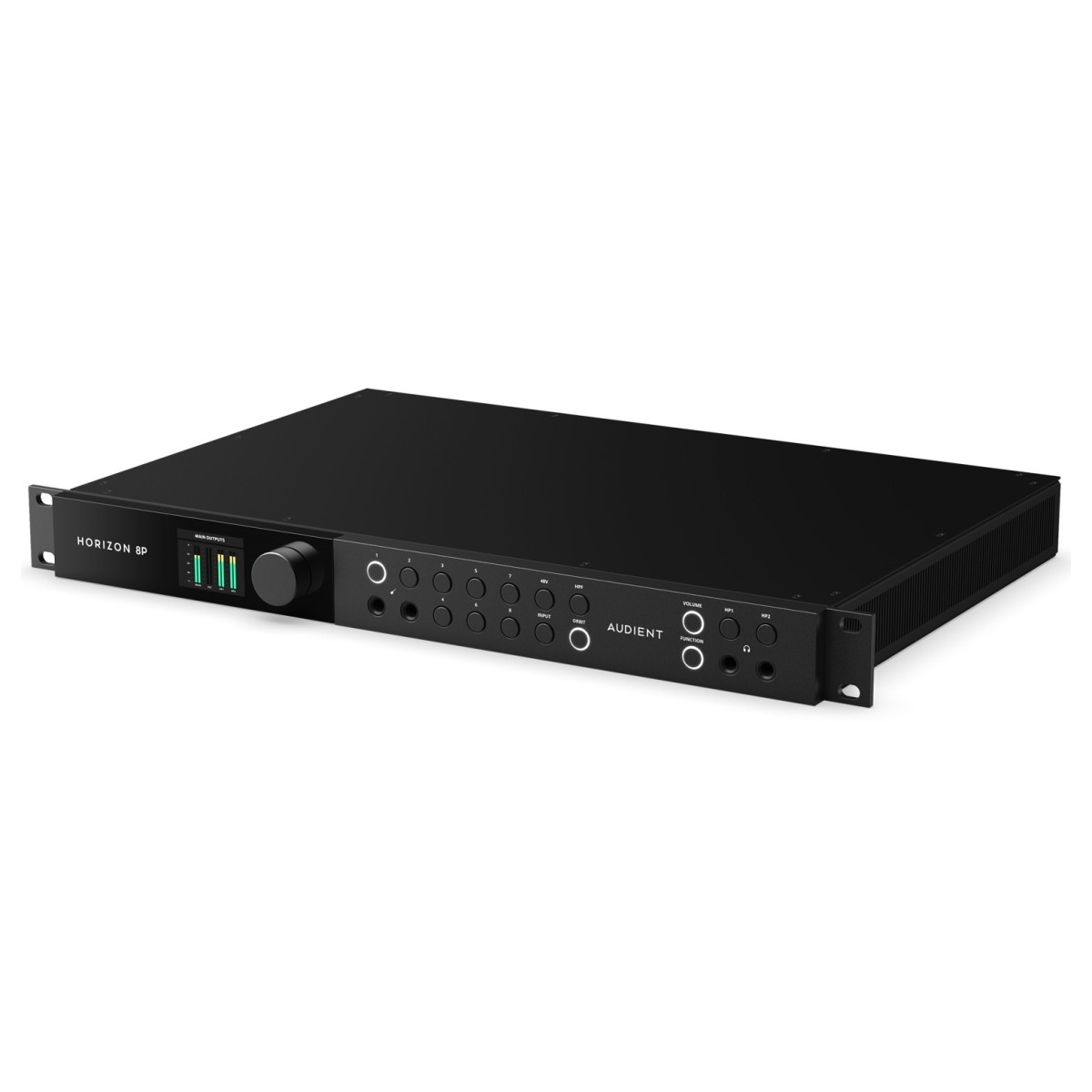
Audient Horizon 8P Thunderbolt 3 Audio Interface
-
-

-
-
-
-
-

Playing videos requires marketing & advertising cookies. By pressing Play, you consent to their use, which will override previously rejected settings. To update your preferences, see our cookie policy.
-
Playing videos requires marketing & advertising cookies. By pressing Play, you consent to their use, which will override previously rejected settings. To update your preferences, see our cookie policy.


This product will be available for purchase soon
Key Features
- 8x Audient console preamps provide 75dB gain with recall
- ORBIT Control offers three selectable microphone impedance voicings
- 32-bit conversion delivers 133dB dynamic range for detailed recording
- 0.99ms round-trip latency provides responsive native plugin monitoring
- Dual ADAT I/O offers 16 channels of digital expansion
Audient Horizon 8P Thunderbolt 3 Audio Interface Overview

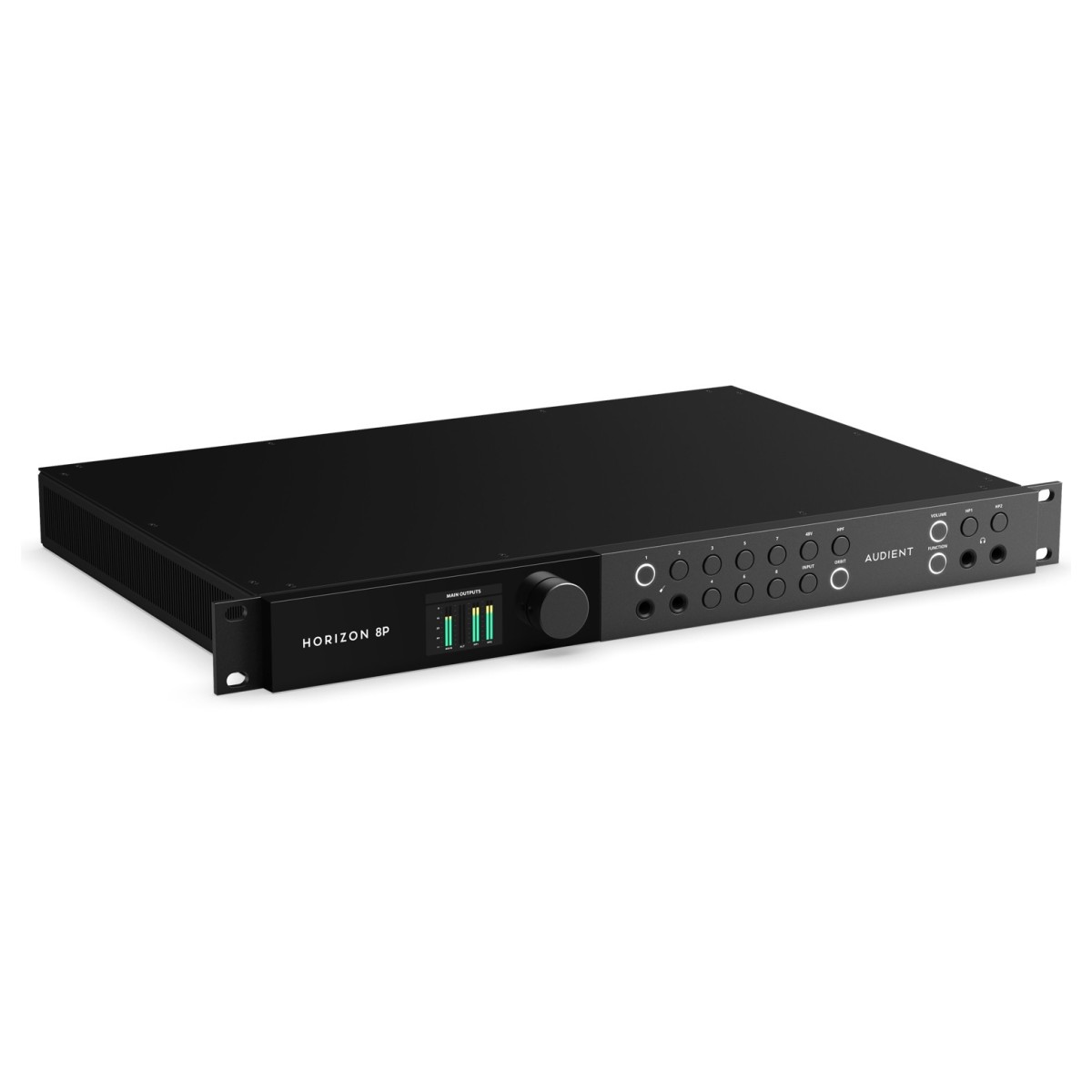
The Audient Horizon 8P Thunderbolt 3 Audio Interface is built for producers and studios recording detailed, characterful multichannel sessions. Eight Audient console mic preamps give you 75dB of clean gain, with digital recall helping you return to previous settings quickly.
ORBIT Control adds three selectable impedance voicings, letting you adjust how each preamp interacts with ribbon, dynamic, and condenser microphones at the source. The 32-bit, 192kHz conversion provides 133dB of dynamic range, giving you plenty of headroom when capturing performances. And with round-trip latency as low as 0.99ms at 192kHz with a 64-sample buffer, you can monitor through native plugins responsively.
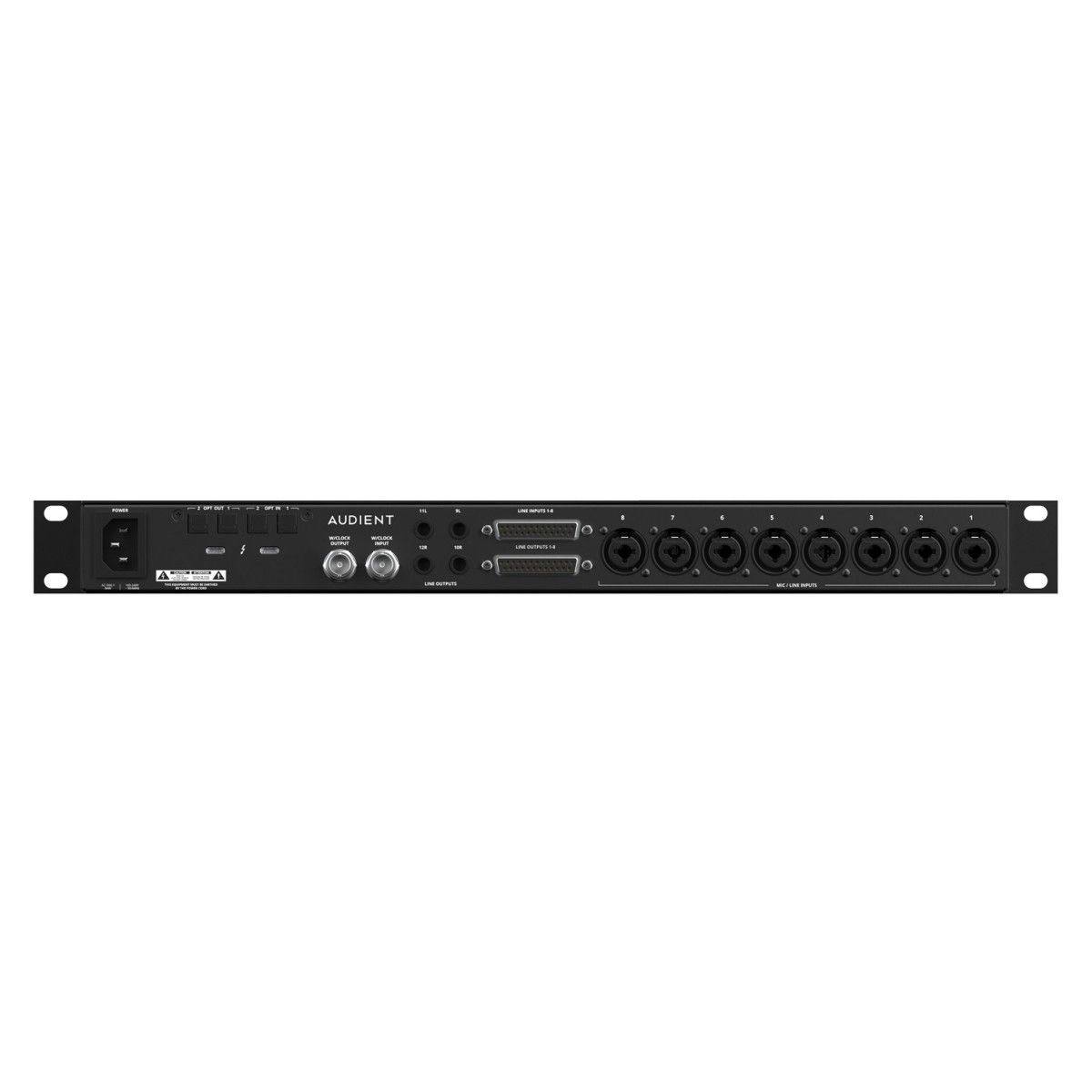
Eight DB25 line inputs also make it straightforward to bring external processors into your setup, while Horizon Control handles routing, custom monitoring, four cue mixes, and onboard comfort Reverb.
Product Ref: 392088
Full Description
View Full DescriptionShape microphones at the source
Eight Audient console preamps give you a complete multichannel recording front end in a single rack unit. Based on David Dearden's ASP8024-HE console circuit design, each preamp provides 75dB of clean, quiet gain, giving you the range needed to handle different recording sources. ORBIT Control goes further by changing each preamp's impedance in hardware.
Choose between high, mid, and low settings to alter how ribbon, dynamic, and condenser microphones interact with the input. This gives you a practical way to shape your recording before it reaches your software, while digital recall makes previous preamp settings easier to revisit.
Capture detail with plenty of headroom
With 32-bit conversion, sample rates up to 192kHz, and 133dB of dynamic range, the Horizon 8P is equipped to capture detailed recordings while leaving useful room for changing performance levels. Its Thunderbolt 3 connection supports 24 inputs and 32 outputs, bringing substantial studio connectivity into a 1U format.
Low-latency performance also helps keep recording sessions responsive. At 192kHz with a 64-sample buffer, round-trip latency can reach 0.99ms, so you can monitor through native plugins without distracting delay. That makes software processing easier to incorporate while tracking.
Connect outboard and expand your studio
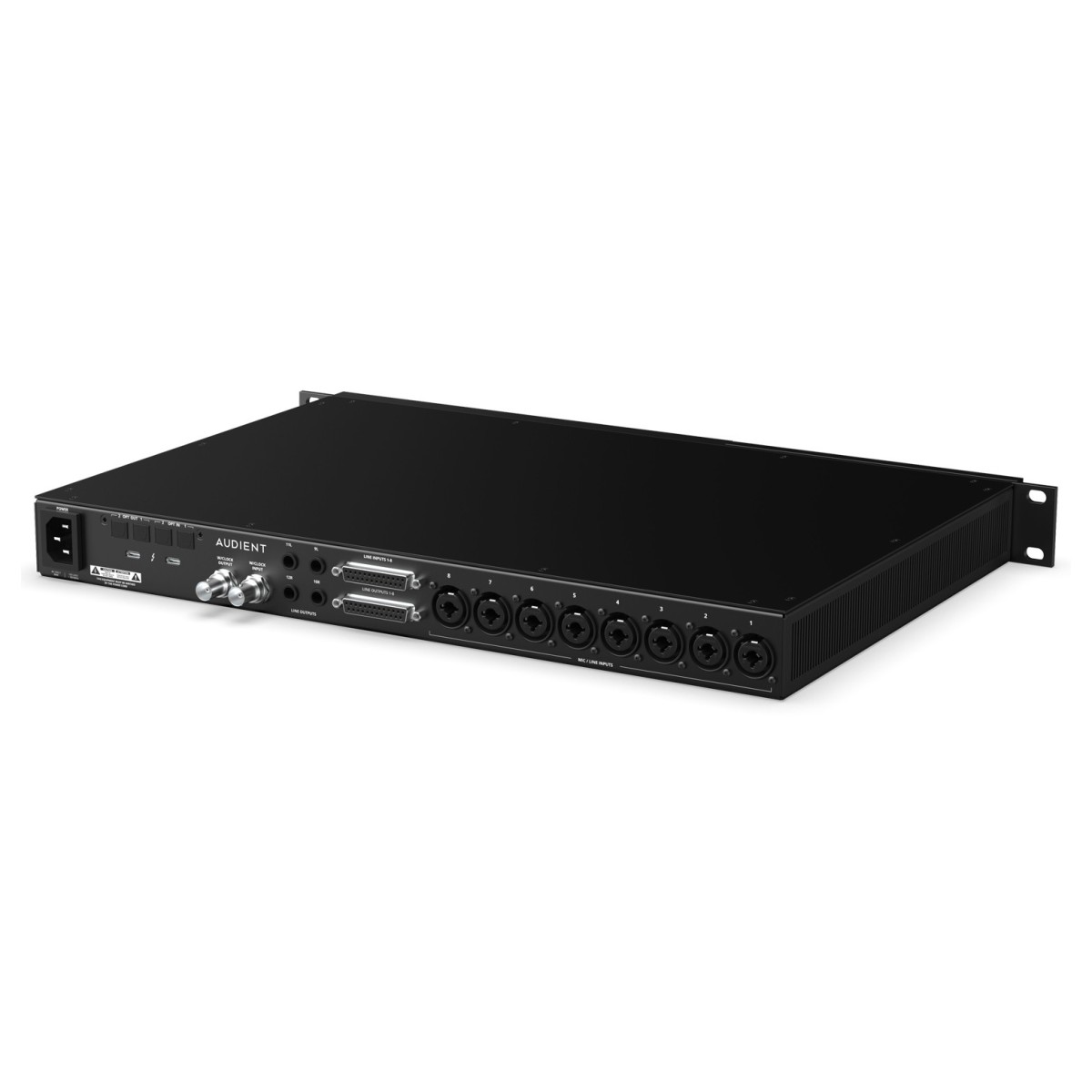
Hybrid setups are well covered, with eight line inputs and outputs available over DB25 for connecting external processors and other studio equipment. Channels one and two also include JFET instrument inputs, giving you dedicated connections for instruments alongside the eight microphone preamps.
Need more digital channels? Dual ADAT input and output provides up to 16 channels of expansion. The architecture can grow further, too, with support for daisy-chaining up to four Horizon units on one driver. A complete system can reach a maximum 200 x 200 I/O, giving expanding studios room to build around the same platform.
Keep monitoring and routing within easy reach
Horizon Control software brings routing and monitoring tasks together, helping you manage busy sessions without unnecessary menu diving. Its routing matrix supports flexible signal management, while custom monitoring and four cue mixes let you create separate feeds for performers. Onboard comfort Reverb can also be added to cue mixes during tracking.
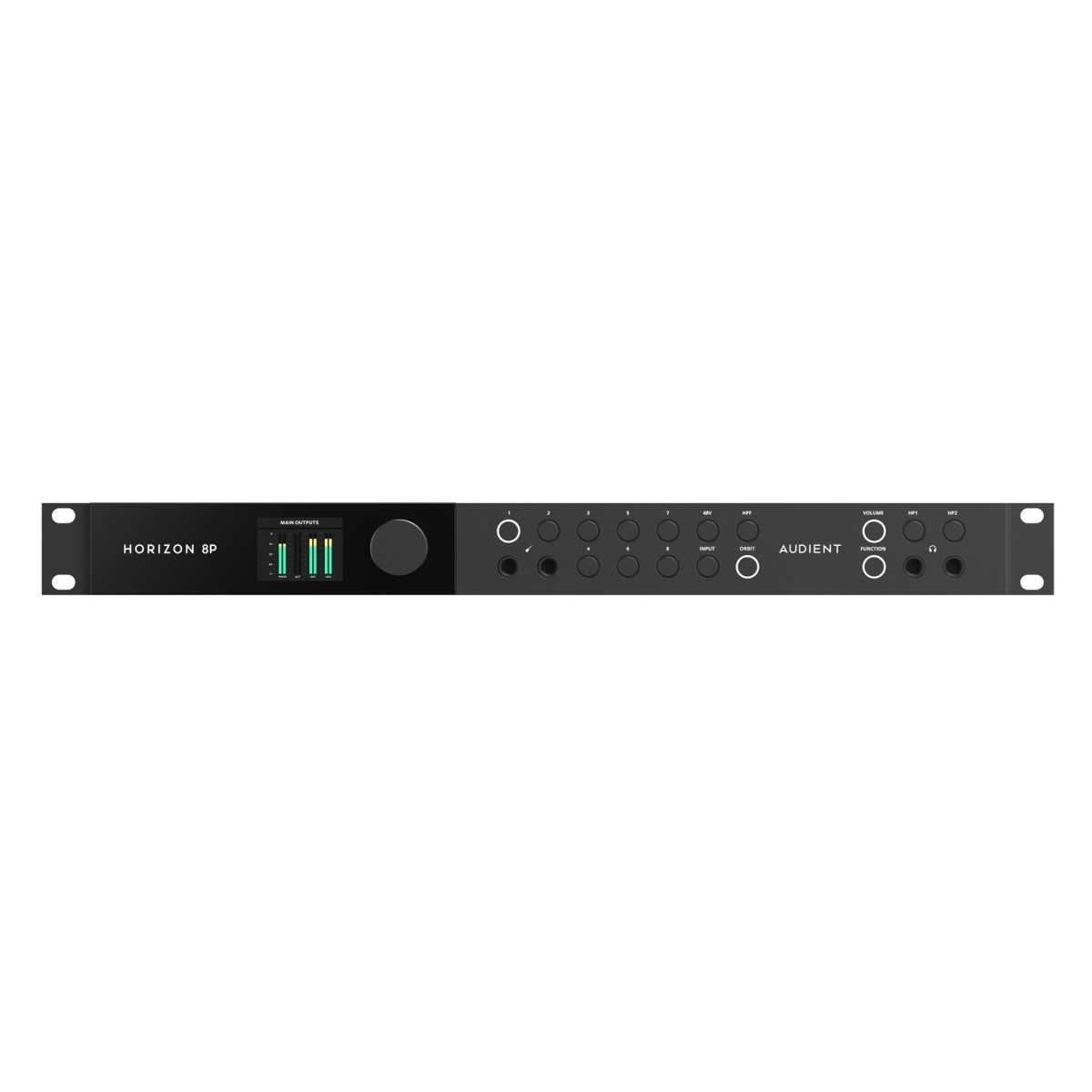
For control-room monitoring, the 8P provides dual speaker outputs for A/B comparisons and two headphone outputs. Hardware controls cover mono, polarity, dim, talkback, and reference level functions. Selectable +18dBu and +24dBu reference levels, plus BNC word clock I/O, help the interface slot into wider studio systems.
Features
- 24-input and 32-output Thunderbolt 3 audio interface
- Eight Audient console microphone preamps with 75dB of gain and recallable settings
- ORBIT impedance control with high, mid, and low microphone voicing options
- Two JFET instrument connections on the first two channels
- Eight DB25 line inputs and outputs for integrating external analogue equipment
- 32-bit conversion supporting sample rates up to 192kHz with 133dB dynamic range
- Ultra-low 0.99ms round-trip latency at 192kHz with a 64-sample buffer
- Dual ADAT connectivity providing up to 16 channels of digital expansion
- Two speaker output pairs for convenient A/B monitoring
- Two independent headphone outputs for studio monitoring
- Dedicated hardware controls for mono, polarity, dim, talkback, and reference level functions
- Horizon Control software provides flexible routing, monitoring configuration, comfort reverb, and four separate cue mixes
- Switchable +18dBu and +24dBu operating levels for studio equipment compatibility
- BNC word clock connections for digital synchronization
- Expandable design supports chaining up to four Horizon interfaces with as many as 200 inputs and 200 outputs
- Durable single-rack-space metal enclosure for professional studio installation
- Compatible with macOS and recording sessions up to 192kHz
- Three-year manufacturer warranty
Specifications
- Product Code: HORIZON 8P
| Reviews of our service
View all